As well as his own volunteerism efforts, Dr Tim Clair is the ADAWA Volunteers Committee Chair, and the not-for-profit dental sector representative of State Oral Health Advisory Council. We spoke to him about volunteerism in the dental community.
As likely many other dentists in Perth, Dr Tim Clair was first inspired to contribute to dental volunteerism by Dr John Owen AM.
“I had worked in medical research and public service roles prior to dentistry and through these experiences had been exposed to Indigenous health, and so the opportunity to contribute through the Kimberley Dental Team was of interest to me,” he recalls.
“I also grew up in North Queensland, which fuelled my interest in working in regional and remote locations of Northern Australia, so KDT offered this opportunity through volunteering where my family circumstances didn’t allow me to relocate for long-term employment.”
KDT
Tim says meeting people in the Kimberley and seeing the vast, beautiful landscapes of the region were huge highlights during
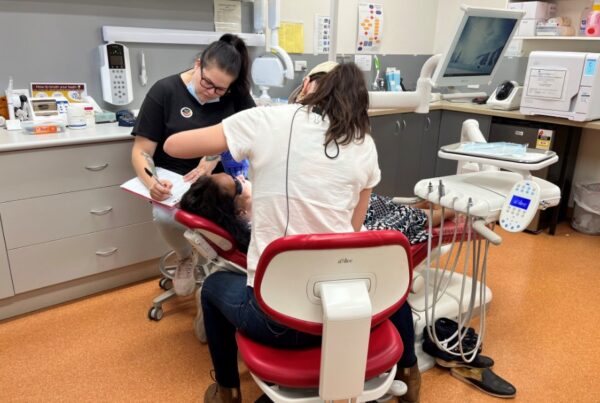
KDT volunteerism trips. “Setting up mobile clinics in classrooms and outdoors on verandahs are also highlights, and something that KDT has honed to a fine art over the years,” he adds.
“I have participated in 12 trips with KDT and, outside of the clinical achievements and pride taken from the treatment that can be provided in remote settings, a highlight of each week is the camaraderie experienced between the members of each team. It is great to be connected with people through having had shared experiences both in clinical situations that can often be out of your comfort zone and from chatting over the course of each week, particularly while on long drives across the Kimberley. Lifetime connections have been made.”
Rokeby Dental
Tim is a dentist at Rokeby Dental, whose team host a regular Charity Day to give back to others.
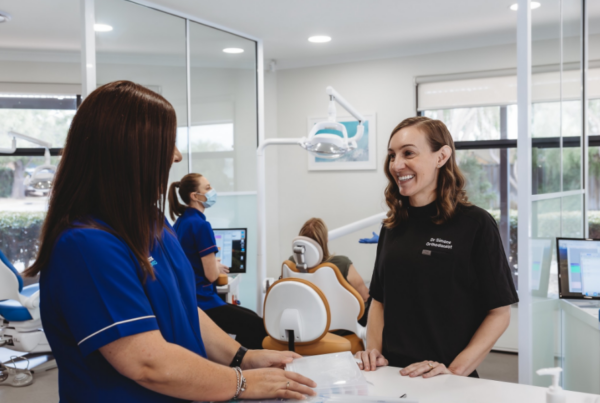
“Since long before my time at Rokeby Dental, the practice has taken a different approach to charity work by opening one Saturday per annum to donate the entire proceeds from treating our regular patients that day to a local charity,” Tim explains. “Practice staff donate their time for the event, and a team lunch follows the morning’s clinical work.
“As with teams who have been on KDT trips, the Charity Day bonds the team through a shared experience to give to others. Patients are also happy to be involved through making appointments on the day or donating to the charity that the practice is supporting that year.”
ADAWA Council
Tim joined as a member of council at ADAWA in 2019.
“I was interested in being more connected as an ADA member and to learn more about the workings of the Association at the Branch and Federal levels from behind the scenes, and I thought I might have something to offer by getting involved,” he recalls.
“Chatting to numerous KDT volunteers over the years who had been on Council also contributed to my interest in getting involved. Additionally, volunteering with KDT also led to my interest in chairing the ADAWA Volunteers Committee when the vacancy arose during my time as a Councillor, and more recently to representing the not for profit/non-Government dental sector on the State
Oral Health Advisory Council (SOHAC) when this opportunity came up.”
He says the role as the ADAWA Volunteers Committee chair has been rewarding. “It is great to hear about the amazing work that each WA-based dental charity is providing, and the goals they have in the interest of helping more people in need,” he says. “To be able to play a role in information sharing between the charities themselves, and between the charities, the Branch and SOHAC more broadly, through the Committee is rewarding.
“Being on both the ADAWA Volunteers Committee and the State Oral Health Advisory Council, has meant I have been able to help strengthen links between Western Australian dental charities and the State’s Office of the Chief Dental Officer,” he adds. “These links have recently increased applications for ad hoc grants for dental care provided by volunteer organisations. This has been a great source of satisfaction and is something tangible that assists organisations provide valuable patient care.”
Encouraging others
To other dentists thinking of being involved in volunteerism, Tim says: “It takes a lot of people to make dental volunteerism viable: founders and board members; dental practitioners, assistants, and students providing the dental care; and auxiliary volunteers, administrators, and funding bodies; and, not least the families of the volunteers who support them giving of their time.
“Give volunteering a go and see if you enjoy it; you will likely find that it can put you out of your comfort zone while being rewarding, collegiate and fun all at once.”