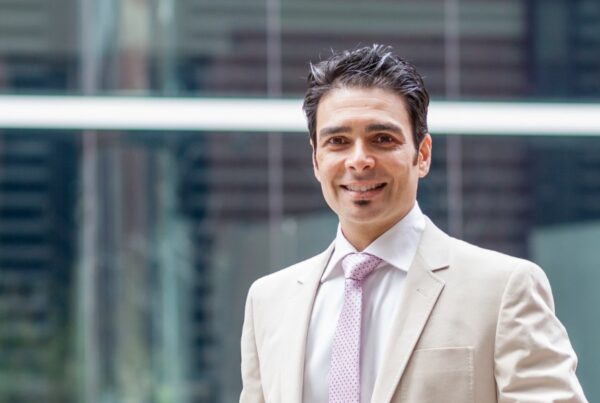
In the lead up to her course ‘Patient-centred Contemporary Peri-Implantitis Treatment’ in October, we caught up with Professor Lisa Heitz-Mayfield.
From her desk at her practice (a heritage listed building that used to be a fire station, which was being freshly painted), she says “implants are like buildings – they also need maintenance.”
Professor Lisa Heitz-Mayfield is well-respected in her field – receiving a Masters in Periodontology in 1996 and Odont Dr (PhD) in 1998 from Lund University, Sweden. She was awarded a Brånemark scholarship and an ITI Scholarship and was appointed as the Head of the Oral Microbiology Research Laboratory at the University of Bern, Switzerland. She also served as the Chair of the International Team for Implantology (ITI) Research Committee, was a member of the ITI Board of Directors and is an Honorary ITI Fellow. She is a member of the Osteology science committee and Board Member of the Osteology Foundation. Professor Heitz-Mayfield is Professor at the University of Sydney and Adjunct Professor at the University of Western Australia.
Professor Lisa Heitz-Mayfield is the Editor-in-Chief of Clinical Oral Implants Research and maintains a specialist private practice limited to periodontology and implant surgery with an emphasis on regeneration, prevention and comprehensive treatment planning.
“I was a general dentist for 10 years before moving to Sweden to study periodontology. General dentistry was very rewarding and I really enjoyed it, but I had this yearning to do something more and I had an interest in implant dentistry and that is why I went to Sweden back in early 90s because it was something that was new and exciting,” Lisa recalls. “I had read a lot about Professor Brånemark and I was thrilled to have the opportunity to work at the Brånemark clinic and study periodontology at the University of Lund in Malmö, Sweden.”
Lisa will be presenting Patient-Centred Contemporary Peri-Implantitis Treatment at a dinner course in October.
The learning objectives include, how to:
- Understand the aetiology and diagnosis of peri-implant diseases
- Understand when to choose which treatment approach, and
- Understand how best to prevent peri-implantitis and its recurrence.
Lisa says the whole dental team, including general dentists and specialists and dental hygienists and dental technicians should be attending this course.
“Attendees can expect to receive some key take home messages for what they can do in their practice to not only treat peri-implant diseases but how to prevent it. That is the key – prevention.”
“They will also get an idea of when they might choose to refer a patient or when they could manage the problem themselves. They will also receive an insight into the current contemporary guidelines as I have been involved as an author and participant in a number of international clinical guideline conferences, which are really state of the art.”
“Peri-implantitis can be a bit of a silent disease – the patient does not always know they have it. One thing I will be talking about is how to diagnose the disease correctly, as well as the steps you need to do when you finish restoring the implant to get a good baseline situation. Early diagnosis of peri-implant disease is important – If you miss the boat, it can be very difficult to treat. Healthy soft tissues around the implants, and healthy gums around the teeth, means a happy patient and a longer lasting implant,” she adds.
“The title is ‘patient centred’ – and those are the key words today in research. Everything we do should be centred around personalising the care for each patient. We need to identify their risk factors, and we have to tailor their individual treatment to get the best outcome for the patient.”
“Much of the research now is focused on not just what we measure as clinicians with a probe and what we see on an x-ray but how the patient experiences the treatment that we provide,” Lisa adds. “This is important for all aspects of dentistry – what the patient experiences matters.”
Peri-implantitis occurs in around 1 in 5 patients with an implant-supported prosthesis and Lisa says the difference that optimal treatment, personalised monitoring and maintenance can make means the patient can keep their implant – hopefully for many years.
“We can never say that something will last for a lifetime – but we can be successful by adopting a preventative approach. Once treated peri-implantitis may recur and that is why it is also so important to know the after-care treatment protocols.”
“Everything I talk about in the course will have a good evidence-based approach and will give the dentist or the hygienist confidence when they are talking to their patient about peri-plant disease management. It is not all about this product or that product, it is about the overall management of the patient.”
Lisa encourages the whole dental team to come to the course. “If you are placing or restoring implants you need to know about the latest developments in this area, because the studies show that it may occur in around 20% of patients that have an implant,” she explains.
“I would encourage dentists to bring their whole team along,” she says. “Invite your hygienists, because they are an important part of the team and are often delegated to look after the maintenance of implants and they need to know what signs to look for and when to consult with the dentist.”
Being a dinner course, Lisa says she is looking forward to being able to interact with the course attendees.
“I enjoy getting to meet the general dentists,” she says. “Often, I get referrals and I know the names, but as I did my original studies in Adelaide, I didn’t study with the locals here.
“It is always nice to meet the dentists and hygienists in person and put a face to the name.”
Lisa adds she enjoys teaching others. “I find teaching invigorating because you always learn a lot when you are teaching – the discussions you have when talking to the students or colleagues – you often learn more than you teach,” she says.
She is renowned for sharing her knowledge locally and internationally, recently co-chairing the very successful International Osteology Symposium in Vienna. “Oral tissue regeneration is my passion,” she says. “Regeneration around implants and also teeth. For those who did not make it to the Symposium in Vienna, this is an opportunity to hear more about the latest advances in peri-implant regenerative techniques.”
Closer to home, Lisa is part of the scientific program committee for the Australian Society of Periodontology Conference (Perio Launchpad) in September, which all members of the dental team are encouraged to attend, www.aspconference.com.
Professor Lisa Heitz-Mayfield will present ‘Patient-centred Contemporary Peri-Implantitis Treatment’ in October. To book your ticket, visit our website below, cpd.adawa.com.au
Some of Lisa’s recommended resources on peri-implantitis:
European Federation of Periodontology clinical guidelines,
https://www.efp.org/education/continuing-education/clinical-guidelines/
Global Consensus for Clinical Guidelines:
https://gccg.online/Home/
ITI Treatment Guide Volume 13: Prevention and Management of Peri-implant Diseases
https://www.quintessence-publishing.com/downloads/23841_heitz-mayfield_iti_tg_13_en_leseprobe.pdf
Implant Disease Risk Assessment IDRA – A tool for preventing peri-implant disease
DOI: 10.1111/clr.13585